You Rang?
A Brief Call Back to the Old Landline

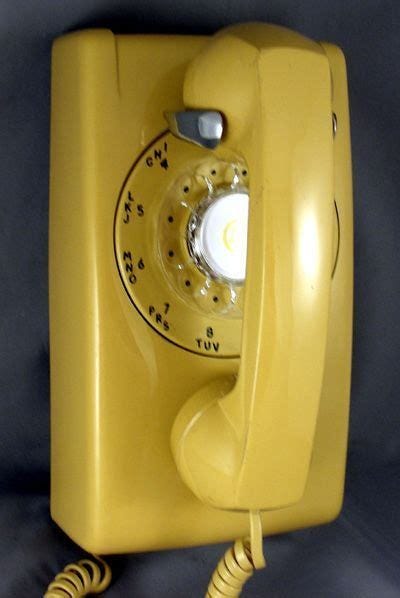
“Hello. HELLO! Hello?” My mother screamed her greetings into the 1970s yellow telephone framed in fraying wallpaper in her kitchen.
Whenever she hung up, it was with a relieved sigh. “I hate the phone,” she’d say.
For someone who hated it, she used it a lot. If you asked her, there was a long queue of wayward relatives and friends wanting to force her onto it, overwhelming her with friendly obligation.
A long, sustained beep greeted you when the banana shaped receiver was brought to your ear. There was no speaker. Only you and the disembodied voice down the telephone line.
The numbers on our first phone were laid out on a dial. It took a careful, long time to call someone’s phone number. Using tiny finger holes, the digits had to be pulled to their corresponding number and released to dial themselves back into place.
My clumsy, fat fingers never got it right the first time. And zero was not my friend.
Brrrrring, Brrrrring, Bring.
If the person on the other end was on the phone, or had left it dangling, your ear filled with an awfully obnoxious busy signal that felt like the auditory embodiment of abject rejection.
Nope. Nope. Nope. Nope.
Everyone in New York City had a 212 area code until 1984, when they relegated Brooklyn, Queens and Staten Island to 718.
My mother’s outrage was shrill and heartfelt. “How’s a girl like me supposed to live outside of 212? I’ve been here my whole life.”
“Choogs,” my father said, using the nickname for her he did when he was feeling loving. “Choogs, you’ll always be a 212 to me.”
Soon after, Ma Bell, the old telephone monopoly, replaced our dial with a touchtone keypad, giving each button its own number and each number its own note. The easy five seconds it took to dial now, was only the beginning.
“Look!” my father cried out with boyish glee. “They have call waiting.”
“Fancy,” my mother agreed.
Call waiting was the miracle we’d all been seeking. Not only did it forestall that awful busy signal but, if someone was expecting a call, instead of not being able to use the phone, I could chat away until I heard the summons of that telltale:
Beep. For a moment I could pretend I hadn’t heard it. Then 10 or so seconds later I’d receive confirmation. Beep.
I had a choice to make here. Ignore it, continue, and hope that whomever was on the other line just disappeared and wasn’t for me. Or I’d get off the phone, depending on how interesting the conversation.
“I’ll call you back,” I’d say, but we both knew I wouldn’t. I liked to listen to other people’s conversations, illicit stories being a particular favorite.
Click.
All the phone extensions in the house were connected. When I answered the phone and it was for my mother, I’d press the phone into my thigh in order to protect the hearing of the person on the other end of the line, scream through the house for her, and wait for her to pick it up.
If I messed up the timing for the exchange, hanging my end up before she’d picked up hers, I’d cut the person off. But when I pushed the buttons that replaced the phone on its cradle and then quickly picked it up again, I could secretly listen to an entire conversation. As long as I didn’t breathe too hard or my sister wasn’t there to give me away.
“Mommy, Katie is listening again!”
My mother and her friends offered each other a rotation of gossip filled headlines. Every once in a while one of her circle would come up with a gem. Which one of them was sleeping with the guy at the deli counter around the corner? And that guy, with his thick sliced corned beef, and pock marked skin, got around! According to my mother, he was only sleeping with Paula in 7A.
“And she’s divorced so what’s the big deal?” Mom was surprisingly open minded that way.
“I hate the phone,” she’d spit, though there was often an endless line of calls she had to make. By then my father had severed phone ties with us, to literally run his own private affairs. He installed his dedicated line we were forbidden to go near.
As the 1980s reached its neon green and leg warmer zenith, I discovered more telephone magic.
Each year the phone company delivered two books. One was the White Pages with residential numbers set out alphabetically, and the other was the Yellow Pages where business advertised and everyone was looking to start with an A to get to the front of the line. But if you dialed 411, an operator, an actual person, would find a phone number for you saving you a trip through the giant books. I only tried it myself once.
“Information, can I help you?”
“Hi information, I’d like the phone number for the Joe’s Pizza on Avenue M.”
“I have it right here. Would you like me to connect you?”
“Sure,” I said.
Later that month, my mother got the bill. “Did you do this?” she said, waving the itemized list of conversations and services we’d consumed. “Did you call…” she could barely get the words out. “Information? On my dime?”
I did what I always did. I stared dumbly and denied. “No.”
She pushed past me and into my bedroom and came out with the cardboard box. “What is this then? You didn’t call Joe’s pizza?”
“Uh-uh.”
Her gaze narrowed, she eyed me like I was a stranger. “You had them connect you. How could you? That’s an extra 70 cents!”
I began to hate the phone.
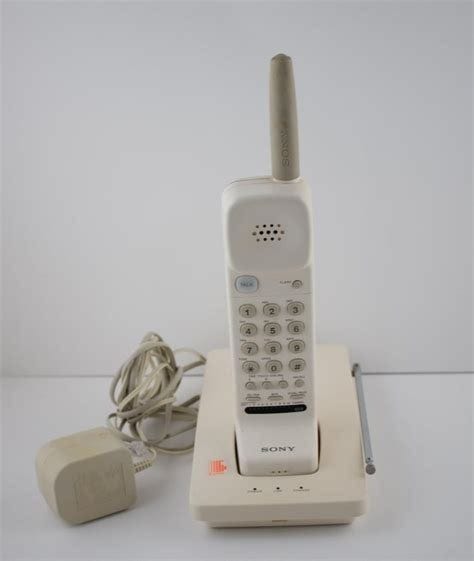
All hell broke loose when we switched to the cordless. No one ever knew where the phone was, and somehow it was traced back to the trash heap I called a bedroom. We ached for the old days when the phone was tethered and my room was cleaned by someone else.
Though 212 remained a local call, anyone beyond the five boroughs was long distance, though only the dialer was on the hook for the fees. The toll was hefty, a by the minute affair.
For that reason, we only spoke to people far away on nights or weekends, and woe betide the person who called during daylight hours. Either something horrible happened, or you were trying to make the phone company rich. There seemed no other explanation.
The answering machine was another loosening of the shackles that kept us chained. Before that, if you were waiting for a call, you had to be there, in the house, close enough to answer.
My mother leaned in. Any technology or an opportunity to rhyme proved too difficult to resist. And this had both.
“Hi, you’ve reached Jean/ Now don’t be mean/ Leave your name and number and it will be seen!” It made me smile whenever I called.
For as much as the telephone offered, it also proved treacherous, and occasionally downright dangerous. I’d have to run back home and try and erase that one message I needed to.
“Mrs. Sterner? Katie hasn’t been to school in three days.”
Sometimes I was successful. Other times not. I wasn’t that into the phone.
We carried dimes and then quarters for pay phones scattered on corners throughout the city. An original, not very mobile phone, but it would do in a pinch. My family was late to the cell phone craze, for the same reason we were late to the microwave craze. My parents never liked to spend money until they were sure it was actually worth it.
But my uncle in Los Angeles had all the latest, greatest things. We went to visit him in his LA mansion. He drove a brand new Rolls Royce and had a brand new wife who had a daughter a year or two ahead of my sister. Such extravagance was looking into the moon.
His stepdaughter was lightyears ahead of us. She taught us other things a phone could do. For instance, you could use a phone number to get the time and the temperature.
“At the tone the time will be 7:13 and 20 seconds. Beep.”
My new cousin showed my sister and me that if two people called that exchange at the exact same moment, and the system was overrun, it would connect the callers to each other.
“Give your number for a good time!” she called into the phone. And a rapid fire response came through. And then she explained to us what that meant.
My sister and I blinked at each other. I was intrigued. And also horrified.
But I never dared call myself. I didn’t know then it was toll free and I was too scared of the bill to risk it. If I thought Mom was upset about my calling information, she would have collapsed if they charged her for the time of day.
When I left home for college out of the tristate area, my mother and I, who were not happy about the phone, spoke everyday. She missed me so much she obliged, perhaps grudgingly, but mostly after 9:00 pm.
I’m afraid to call strangers, though I’m happy to lose an hour or two chatting away to old friends. Don’t ask me to call a doctor’s office or a car dealer, or a dentist, or a restaurant. I will ruminate for hours before surrendering. What should I say? What if it’s wrong? What if they misunderstand me? What if they hang up? What if it’s an extra charge?
I hate the phone.
The landline was a tool from a world that would be as foreign for my children, as today would be for my parents. Cellphones can do everything, but they rarely make phone calls. Who needs to engage in conversation when you can comment in a scroll? There is an art to it, I admit. When do you hang up? How long do you let the silence fill the line?
__________. ____________________.
The older generations complain that the younger ones don’t call. But I don’t mind tracking them down, texting them until they get the point and dial.
My husband called from his cell the other day. “They’re getting rid of the landlines in the office.” He works in a company thousands strong in a building in midtown Manhattan.
Twenty years ago, I’d memorized this 212 number, perhaps the last one to stay in my mind. And maybe it’s right and the moment has come, but a part of me will always long to sit on the floor, twirling a curly wire between my fingers and listening to someone give me their news, connecting to life spinning out in a network of improbably miraculous lines.
According to the wsj landlines are making a comeback.
My first telephone number is engraved in my memory. The biggest change for us was a princess phone extension added to a hallway so my mother could have her bedroom phone to herself. We stretched that cord so far it never returned to its coiled shape.